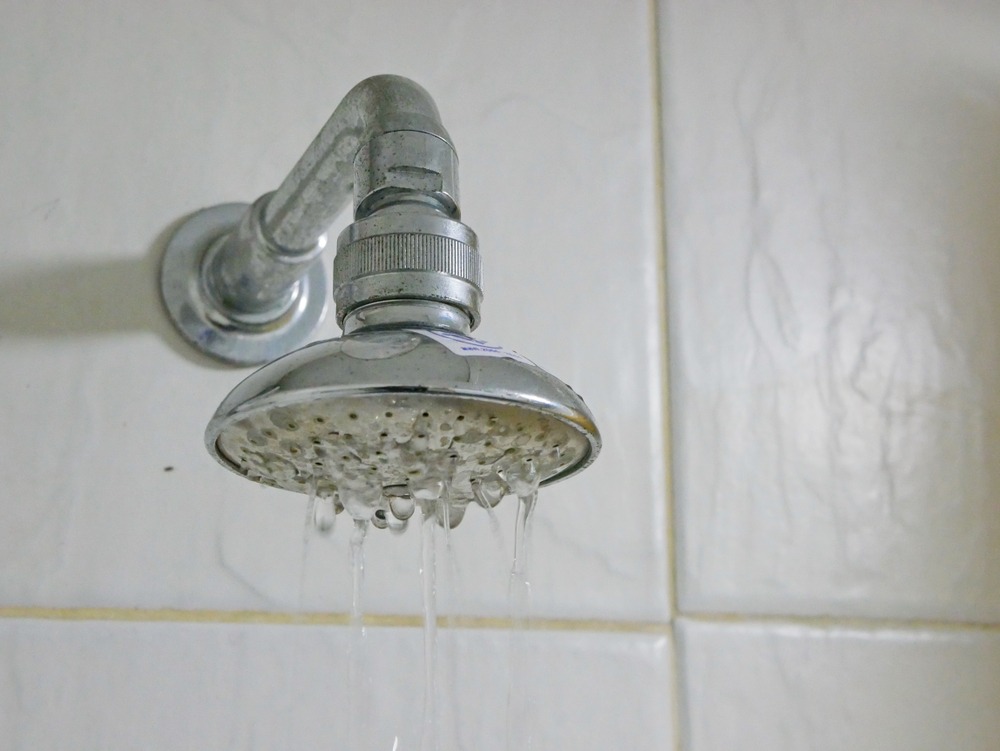

Few things are more frustrating than a weak, trickling shower when you’re trying to start your day. We’ve all been there: you step under the showerhead expecting a refreshing blast of water, only to be met with a pathetic drizzle that makes it nearly impossible to rinse out shampoo, let alone wake up for the morning commute. While it might seem like a minor annoyance, sudden drops in water pressure can often signal underlying issues within your plumbing system that require immediate attention. Ignoring the “drip” today could lead to a “flood” of expensive repairs tomorrow.
At Apollo Heating, Cooling, and Plumbing, we’ve seen it all in the Akron and Northeast Ohio area. From simple fixes to complex system failures, understanding the “why” behind your low pressure is the first step toward getting your morning routine back on track.
1. Mineral Buildup and Clogged Showerheads
In Northeast Ohio, we are no strangers to hard water. Our regional groundwater often contains high concentrations of minerals like calcium and magnesium. Over time, as water flows through your showerhead and evaporates, these minerals remain behind, forming chalky white deposits known as limescale.
If your water pressure has dropped gradually, or if the water seems to be spraying at odd angles, the culprit is likely a clogged showerhead. Those tiny nozzles become restricted, forcing the same amount of water through a much smaller opening or blocking it entirely.
Pro Tip: You can often test this by unscrewing the showerhead and turning on the shower arm. If the flow from the pipe is strong, the showerhead is your problem. While a vinegar soak can sometimes dissolve these deposits, heavy buildup in older fixtures usually warrants a professional replacement to ensure your flow rate meets modern comfort standards.
2. A Malfunctioning Pressure Regulator
Most homes in the Akron area are equipped with a water pressure regulator (also known as a pressure-reducing valve). This bell-shaped device is usually located near the main water shut-off valve where the line enters your home. Its job is exactly what it sounds like: it regulates the high pressure from the municipal water main down to a safe level for your home’s pipes and appliances.
When this valve fails, it can go one of two ways. It can “fail open,” sending dangerously high-pressure water through your pipes, which can cause bursts, or it can “fail closed,” resulting in a sudden, dramatic drop in water pressure throughout the house. If you notice that the low pressure isn’t just in your shower but also at the kitchen sink and the outdoor spigot, your regulator is likely the culprit. Because this involves the primary entry point of your plumbing, it’s a job strictly for a licensed plumber.
3. Hidden Pipe Leaks
This is the scenario every homeowner dreads. If your shower pressure has suddenly plummeted, it could be because water intended for your showerhead is leaking from a pipe before it reaches the bathroom.
Hidden leaks are particularly dangerous because they often occur in “blind spots” located behind drywall, under floorboards, or in crawlspaces. A leak doesn’t just steal your water pressure; it causes:
- Structural damage to wood and drywall.
- Mold and mildew growth, which affects your family’s health.
- Spikes in your water bill.
If you suspect a leak, check your water meter. Turn off all water in the house and see if the meter is still spinning. If it is, you have a leak that needs to be detected by a professional immediately.
4. Corroded or Galvanized Piping
If you live in one of the beautiful, historic neighborhoods of Northeast Ohio, your home might still have galvanized steel pipes. While these were the gold standard decades ago, they have a definitive lifespan. Over time, the zinc coating on the inside of these pipes wears away, leading to internal corrosion and rust.
Think of it like a clogged artery. Rust builds up on the inside walls of the pipe, narrowing the diameter through which water can flow. This doesn’t just lower the pressure; it can also lead to “rusty” or discolored water. Unfortunately, there is no “cleaning” the inside of a corroded pipe. The only long-term solution is a partial or full repipe with modern materials like copper or PEX, which won’t corrode and will restore your home’s pressure to its former glory.
5. Issues with the Main Water Shut-off Valve
Sometimes, the most complex-looking problems have the simplest explanations. Your home has a main shut-off valve that controls the water supply for the entire property. If you recently had work done on your home, or if someone was tinkering in the basement or utility closet, this valve may have been partially closed.
Even a slight turn of the handle can throttle the flow of water into your home. There are typically two types of valves:
- Gate Valves: These have a round handle like a hose spigot. If it’s not turned all the way to the left, it’s restricting flow.
- Ball Valves: These have a lever handle. The lever should be perfectly parallel to the pipe for full flow.
If the valve is old, it may have partially collapsed internally. If the handle feels stuck or won’t turn, do not force it, as you could snap the stem and cause a major leak.
Restore Your Comfort with Apollo
You shouldn’t have to settle for a lackluster shower. Our team has served the Northeast Ohio community for years, bringing a blend of technical expertise and local “neighborly” service to every job. Whether it’s a simple mineral clearing or a complex regulator replacement, we have the tools and the talent to get the job done right the first time.
If your shower has lost its power, don’t wait for the problem to get worse. We are proud to serve homeowners throughout Akron, OH, and the surrounding Northeast Ohio region. Contact Apollo Heating, Cooling, and Plumbing today for a comprehensive plumbing inspection and pressure test. Let us help you bring the “refresh” back to your morning routine!